


Why handicrafts education and training must start at the school level in India
As per one of the state skill development portals, a quick look at job-oriented skilling in the Handicrafts and Carpet sector provides the following information about job roles:
For the above job roles, the candidate has to be 5th class pass and apparently these are entry level job roles. However, the scope of the Handicrafts and Carpet sector is so huge that it has tremendous potential to provide job and entrepreneurship opportunities to many youth in India.
The question we need to ask at this juncture is how prepared are we to tap the potential of this extensively rural-based industry sector? Particularly, in the backdrop of the fact that most artisans have acquired the skills informally as it was passed on from generations and the professions are limited to certain families. Also, their literacy levels are quite low and their awareness about the markets and business is poor. This makes it difficult for younger generations to continue the family tradition and they prefer to migrate to cities in search of better livelihood opportunities. A ray of hope and lot of positive reinforcement comes in the form of the support from the policy makers who laid special emphasis on arts, crafts and creative education in National Education Policy 2020.
The question we need to ask at this juncture is how prepared are we to tap the potential of this extensively rural-based industry sector? Particularly, in the backdrop of the fact that most artisans have acquired the skills informally as it was passed on from generations and the professions are limited to certain families. Also, their literacy levels are quite low and their awareness about the markets and business is poor. This makes it difficult for younger generations to continue the family tradition, and they prefer to migrate to cities in search of better livelihood opportunities. A ray of hope and lot of positive reinforcement comes in the form of the support from the policy makers who laid special emphasis on arts, crafts and creative education in National Education Policy 2020.
Handicrafts and Carpet sector is in urgent need of skilled professionals who can transform the sector by making it organized and formal for better productivity and business.
One of the key recommendations of National Education Policy 2020 (NEP 2020) is the introduction of formal education and training in handicrafts from the school level. Placing the need for hiring local artisans and crafts persons as guest faculty for these courses, the policy emphasizes on integrating craft-centered subjects that can in fact help students discover and nurture their innate talent and skills, besides appreciating local traditions and culture.
How is this going to help?
Whether it’s a wooden toy or a piece of terracotta jewellery or bamboo craft or a woolen carpet – when children show interest in these crafts, we need to boost it with the right knowledge and connect them with artisans who can mentor and groom them.
Head, Hand and Heart: Crafts in the school curriculum
Holistic education is all about enlightening our intellectual progress through a balanced approach to learning. At least in the formative years, children should get exposure to working with hands and appreciate manual work. Any craft related or creative work automatically provides a multi-sensory experience as it involves our head, hand and heart, besides inculcating a respect for manual work.
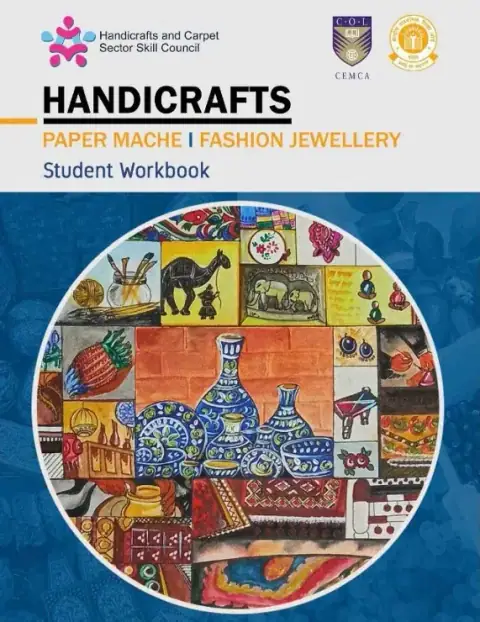
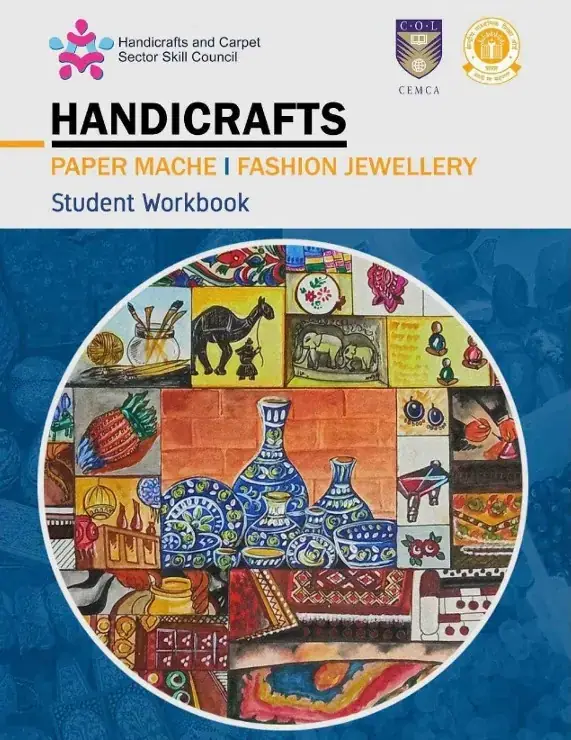
Based on this principle, there has been a special emphasis on including craft related activities in the school curriculum. For example, the CBSE curriculum at the Middle school level has already incorporated Handicrafts as a subject and it offers courses in Paper Mache and Fashion Jewelry. The link below gives access to the workbook with practical demonstrations of the crafts included at the school level. Handicraft Student Workbook
While it is heartening to see small beginnings at the school level, we await similar curricular changes in the higher education level. If the school level curriculum is creating awareness and laying the foundation about the careers in crafts, we also need college level vocational courses that strengthen the skills and knowledge by opening new doors towards entrepreneurship for the new artisans-in-the-making.
References: